
Important: gambling and sports betting are activities that require a license and strict compliance with the legislation of the country where the operator works. Launching such a product without a license and age-verification/KYC procedures is illegal.
Example of an implemented platform
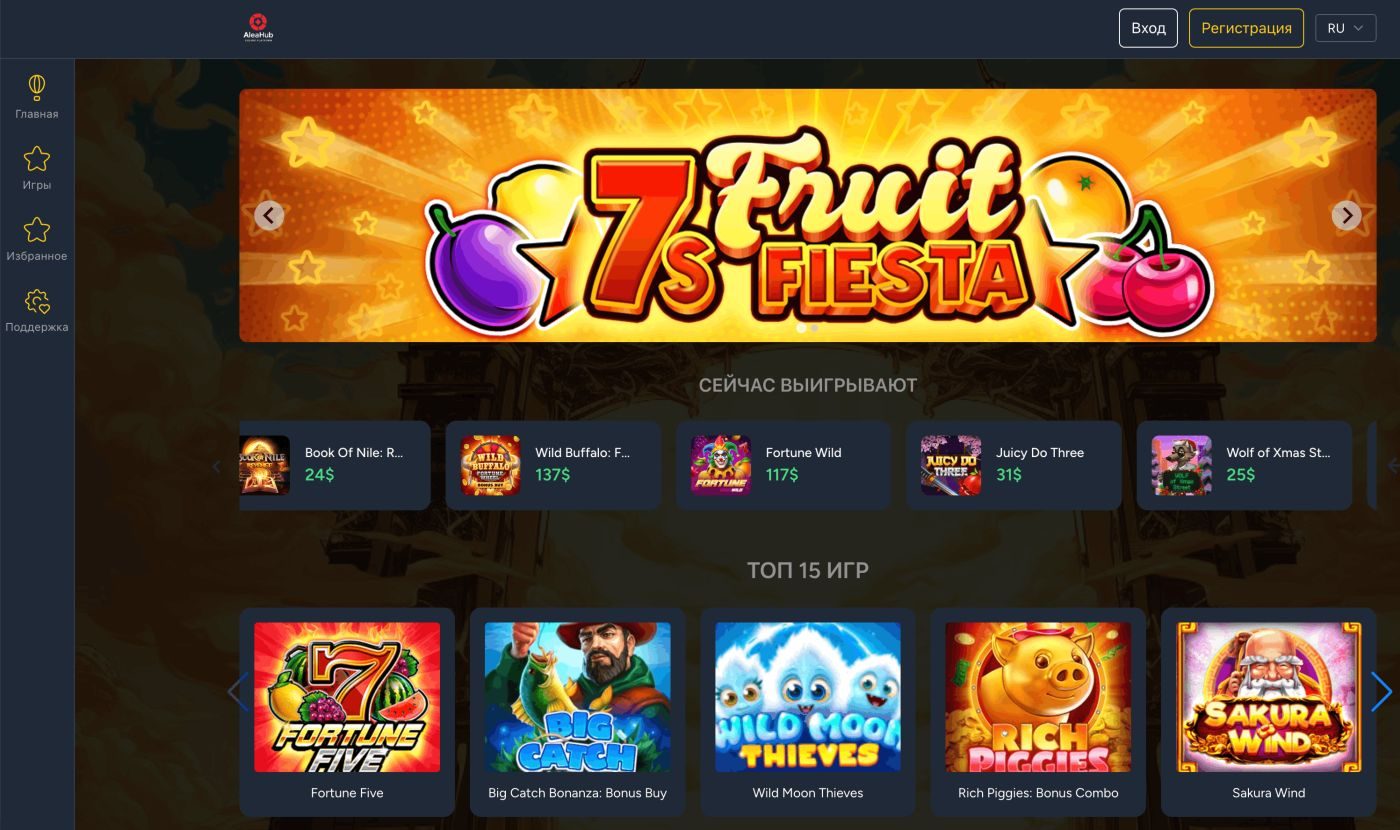
Home page of one of the implemented casino platforms: game catalog, banners and top games
This is just one example — the design, brand, set of games and functionality are developed individually to order, the shown design option does not commit you to anything. Want a similar platform under your own brand or a fully custom development? — we will discuss the task and select an option.
Betting functionality: turnkey sports betting
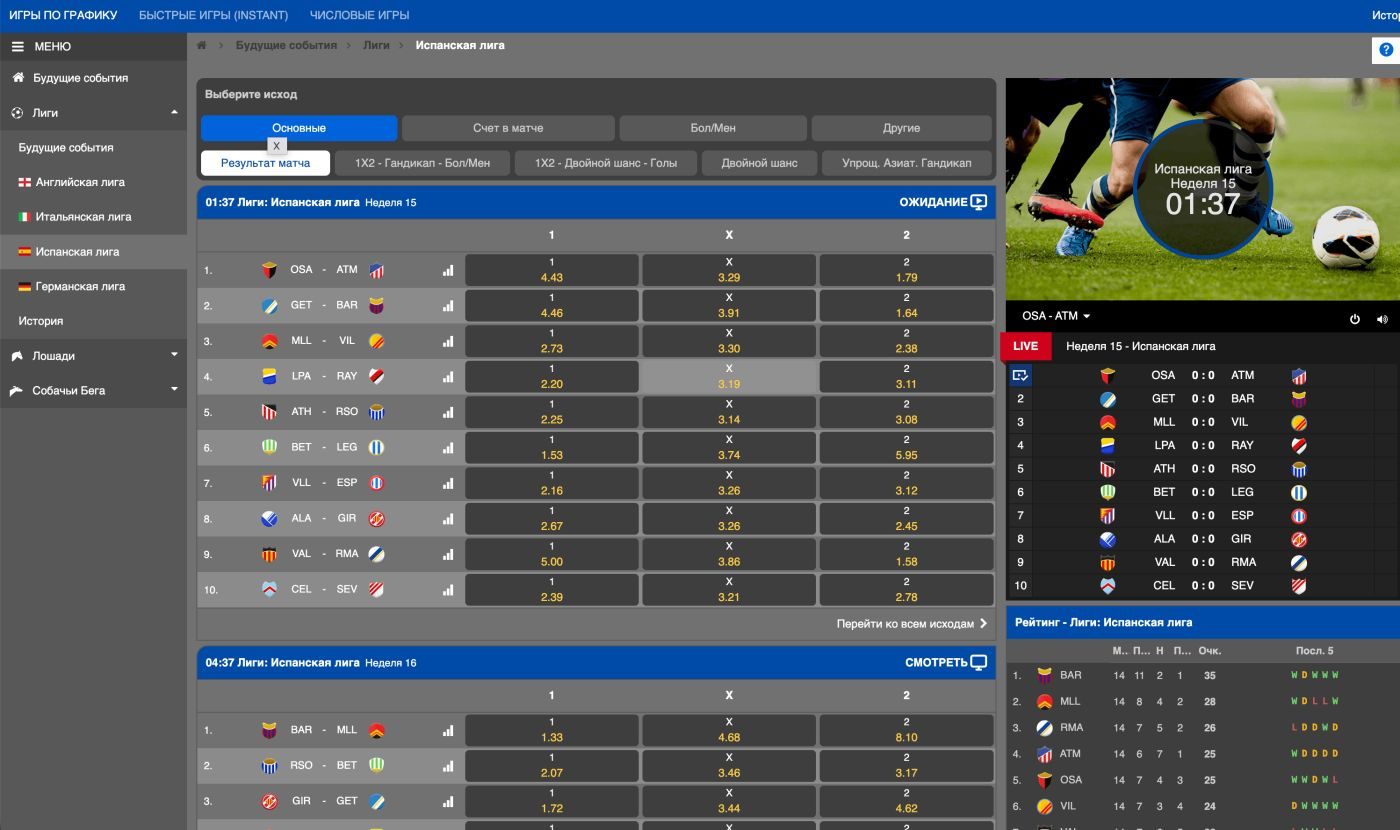
Example of the betting section interface with a line on Spanish league matches and a live broadcast
The betting module can be connected both separately and together with the casino platform — you can launch a hybrid "casino + sports betting" project under a single brand. — we will advise which option suits you.
Which modules make up a casino and betting platform
1Game Aggregator. A single integration with hundreds of game content providers (slots, live casino, crash games, virtual sports) through one API, so that the operator does not need to connect each provider separately.
2PAM — Player Account Management. The core of the platform: a single gaming account, wallet, transaction history, limits and responsible gaming tools (self-exclusion, deposit limits, time-outs).
3Sportsbook Engine. Receiving live and pre-match feeds from sports data providers, risk management of lines and odds, automatic trading and limits on anomalous bets.
4CRM and bonus system. Player segmentation, loyalty programs, automated promotions, retention and reactivation scenarios, personalization of offers.
5Payment module. Integration of bank cards, e-wallets, local payment methods and cryptocurrencies, as well as anti-fraud scoring of transactions.
6KYC/AML and compliance module. Identity and age verification, checks against sanctions lists, monitoring of suspicious operations — a mandatory requirement of practically all licensing bodies.
7Back-office and BI analytics. The operator's control panel: financial reports, metrics on players and games, risk management and configuration of business rules in real time.
8Retail module (SSBT/OTC). For land-based points and self-service terminals — management of devices, cash operations and offline balances synchronized with the player's online account (omni-channel).
Go-to-market models
- White Label. A ready-made turnkey platform where the operator gets an already working product under their own brand. Fast launch (weeks), but limited customization and operation under the platform provider's license.
- Turnkey solution. A more flexible "turnkey" option: your own license, more control over the bonus policy, payments and partner integrations, but also more responsibility for compliance.
- Custom development. Individual development of a platform from scratch for a specific market and business model. The longest and most expensive path, but also maximum flexibility of architecture, design and unit economics.
- API integration / aggregation. The company connects to ready-made game and bookmaker aggregators via API, adding its own layer of UX, CRM and marketing on top of someone else's content.
The choice of model depends on the budget, time to market, target jurisdiction and how unique the product needs to be in terms of brand and functionality.
Licensing and legal aspects
Responsible gaming tools (deposit limits, self-exclusion, age verification) are not a formality but a mandatory element of the platform architecture in practically all jurisdictions.
Technology stack
1Microservice architecture — payments, PAM, the bonus engine and the game aggregator are most often split into independent services that scale separately from each other.
2Real-time layer — WebSocket/Server-Sent Events for instant updating of odds, the live score and game status without reloading the page.
3Cloud infrastructure with horizontal scaling, load distribution across regions and redundancy — critical during peak loads (for example, major sports tournaments).
4Anti-fraud and monitoring in real time — analysis of behavior patterns, transaction scoring, protection against multi-accounting and bonus abuse.
How much does it cost to launch a platform: Openmall pricing
1Basic — $99/mo + 30% GGR. Game front-end and admin panel, hosting and technical support, access to the basic pool of providers, updates included.
2Premium — $499/mo + 15% GGR. Everything from the basic plan, expanded access to providers, tournaments and custom bonuses, partial customization of the front-end, priority support and help with the license.
3Professional — from $9999 one-time + 10% GGR. Everything from the premium plan, full source code, installation on your server, full design customization, SLA support, help with the license and a built-in provider base.
We calculate the exact cost for your market, brand and scope of customization individually. — we will send demo access and an offer.
iGaming development trends
As in any highly regulated niche, technological leadership here is impossible without legal literacy: the strongest products from an engineering point of view lose out in the market if compliance processes are not built.
Casino and betting software development: how the iGaming industry works